Assistant Professor School of Software

Xikang Feng 冯喜康

Portrait of Xikang Feng
Northwestern Polytechnical University

I am an Assistant Professor at the School of Software, Northwestern Polytechnical University, since July 2020.

I received my Ph.D. and Bachelor's degrees from the Department of Computer Science, City University of Hong Kong.

Recent news

All news ↗

My new personal website is now live.

The site brings together my research, publications, and projects. I'll share new papers and other research updates here.

My research interests include bioinformatics, single-cell sequencing, machine learning, data mining, algorithm design, and software development.

BioinformaticsSingle-cell sequencingMachine learningData miningAlgorithm designSoftware development

Publication highlights

All 17 publications ↗

† Equal contribution   ·   * Corresponding author

2026*
Genome BiologyIF 9.2 · 2025JCR Q1 · 2025↗

Benchmarking of haplotype- and clone-specific detection callers of complex copy number alterations in single-cell DNA sequencing with HCDSIM and HCBench

Xikang Feng†*, Anna Jiang†, Sisi Peng†, Qiangguo Jin, Liang He, Lingxi Chen

Single-cell DNA sequencingCopy number alterationHaplotype-specific copy numberLoss of heterozygosityMirrored-subclonal CNATumor evolutionSimulationBenchmarking
Abs
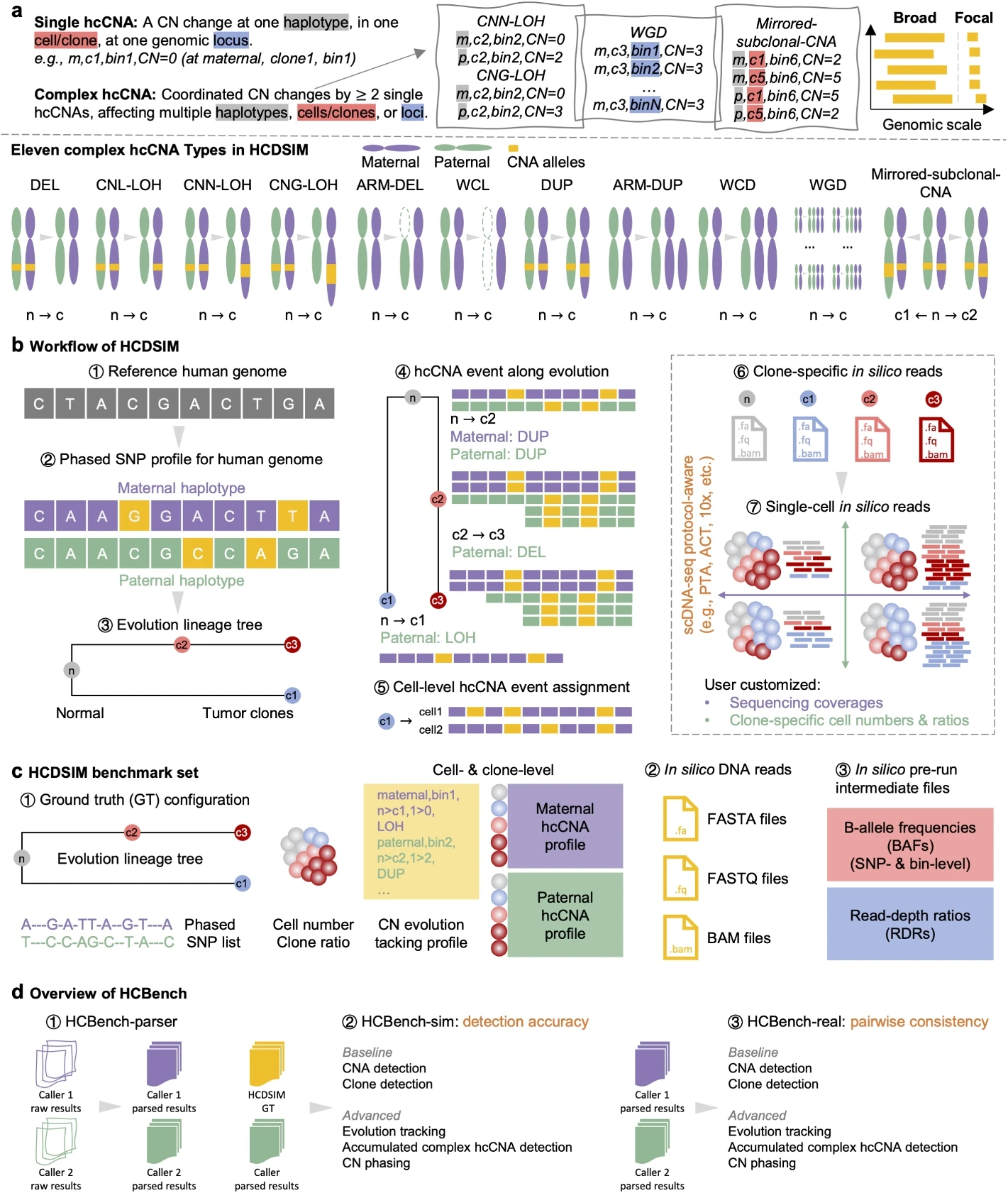
Background Single-cell DNA sequencing enables high-resolution characterization of somatic copy number alterations, yet accurately detecting haplotype-, cell/clone-, and locus-specific copy number alterations (hcCNAs) remains challenging. Complex hcCNA events, characterized by coordinated hcCNA changes affecting multiple haplotypes, clonal populations, or genomic loci, are pervasive in cancer and constitute important mechanisms underlying intratumor heterogeneity and tumor evolution. Results We present HCDSIM, a single-cell genomics simulator that models complex hcCNA events during clonal evolution, and HCBench, a benchmarking framework with simulation-based and real-data concordance modules. We evaluate five leading callers at 5 Mb and 100 kb resolution across sequencing coverage, clone structures, and clone ratios in simulation. CHISEL provides the best overall performance in hcCNA detection at 5 Mb but fails to correctly phase over half of the allelically imbalanced bins. SIGNALS exhibits the strongest clone detection among retained cells but poor hcCNA inference and limited phasing. Alleloscope achieves moderate clone recovery but low hcCNA accuracy. SEACON performs relatively well for deletions at 5 Mb, whereas CNRein performs best in inferring clone structure, evolution, and deletions at 100 kb. Simulations further demonstrate that caller rankings are generally stable across tree topologies and clone proportions, with task-specific exceptions. On real data, however, callers are highly discordant on three low-coverage single-cell DNA sequencing datasets. Conclusions These findings highlight the critical need for improved algorithms targeting complex hcCNA detection. HCDSIM and HCBench provide a robust foundation for developing and evaluating next-generation hcCNA callers.
Bib
@article{doi_101186s13059-026-04358-7,
  title = {{Benchmarking of haplotype- and clone-specific detection callers of complex copy number alterations in single-cell DNA sequencing with HCDSIM and HCBench}},
  author = {Xikang Feng and Anna Jiang and Sisi Peng and Qiangguo Jin and Liang He and Lingxi Chen},
  journal = {Genome Biology},
  year = {2026},
  doi = {10.1186/s13059-026-04358-7},
  url = {https://doi.org/10.1186/s13059-026-04358-7}
}
Journal metrics

BIOTECHNOLOGY & APPLIED MICROBIOLOGY JCR Q1 JIF rank 12/180

GENETICS & HEREDITY JCR Q1 JIF rank 10/192

2025 annual data · ShowJCR community dataset · Retrieved 2026-11-23 · Source ↗

2026*
Briefings in BioinformaticsIF 7.3 · 2025JCR Q1 · 2025↗

CRESCENT: a deep learning framework with multi-scale attention for detecting recurrent copy number alterations

Xikang Feng†*, Zheng Xu†, Sisi Peng, Jieyi Zheng, Chuan Ma, Qiangguo Jin*, Lingxi Chen*

copy number alterationsrecurrent CNAfocal CNAcancer analysisdeep learning
Abs
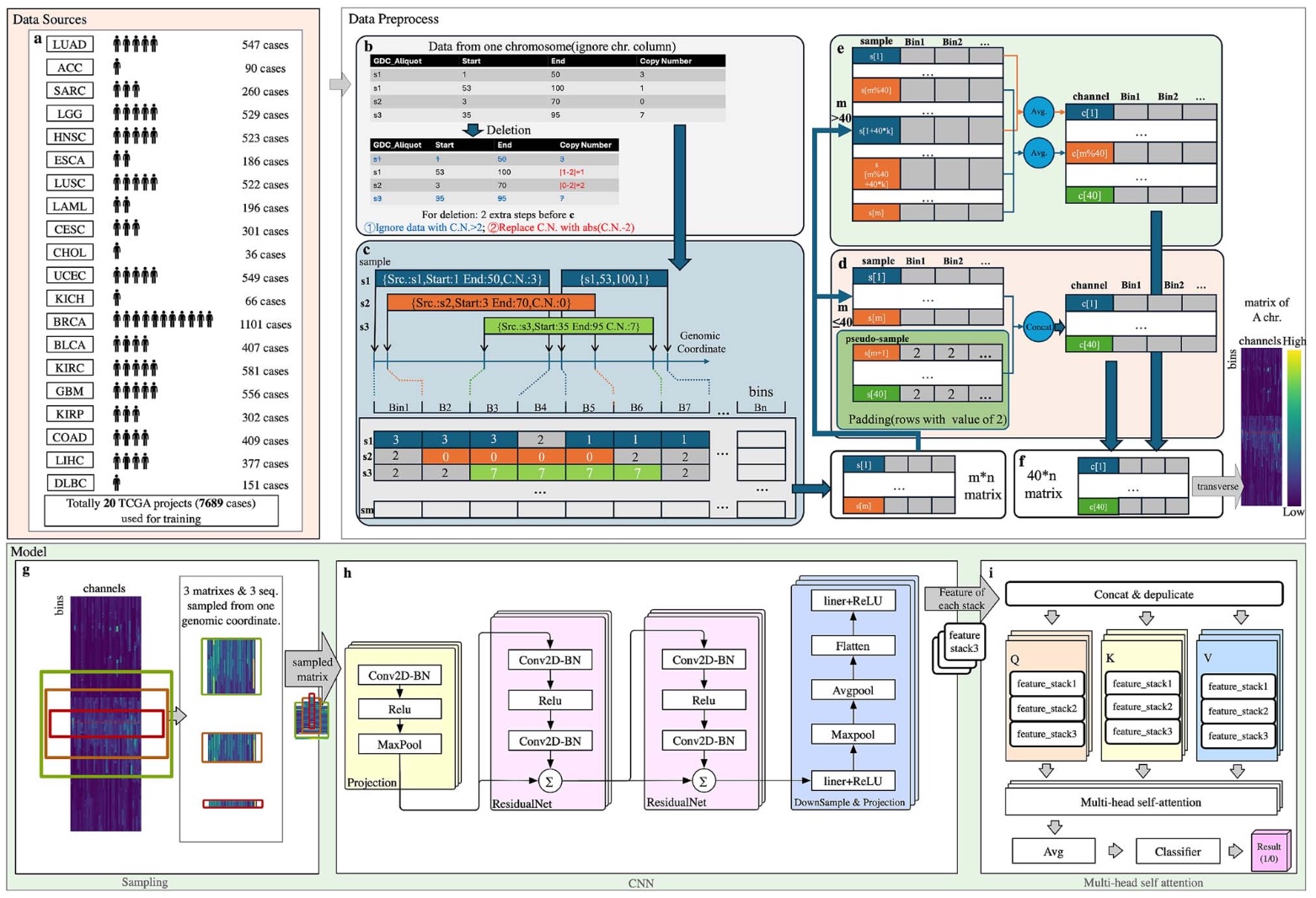
Abstract Recurrent copy number alterations (CNAs) are fundamental drivers of tumorigenesis, yet identifying them reliably remains a challenge due to the extreme variability in their genomic scale and context. Current methods often struggle to balance sensitivity across focal, segmental, and arm-level events. Here, we present CRESCENT, a deep learning framework designed to detect recurrent CNAs by integrating multi-scale sampling with convolutional neural networks and self-attention mechanisms. By processing copy number profiles from 7689 cases across 20 The Cancer Genome Atlas (TCGA) cancer projects, CRESCENT learns to distinguish recurrent drivers from background noise through parallel feature fusion. In rigorous leave-one-project-out cross-validation, the model demonstrated robust generalization, achieving area under the curves of 0.894–0.967 for amplifications and 0.804–0.929 for deletions in representative cohorts (Bladder Urothelial Carcinoma, Sarcoma, Glioblastoma Multiforme, Uterine Corpus Endometrial Carcinoma). Finally, extending beyond the TCGA-specific cross-validation, we trained a unified pan-cancer model to assess CRESCENT’s generalizability on simulated datasets and independent, non-TCGA cancer cohorts (CGCI and TARGET). Benchmarking against standard tools, including GISTIC2 and RUBIC, reveals that CRESCENT offers superior detection balance, identifying the highest total number of significant events across focal and broad scales. Moreover, extensive focal gene expression validation and pathway annotation, coupled with survival analysis, highlight that CRESCENT identifies critical oncogenic drivers and prognostic markers that conventional statistical methods often overlook. In all, CRESCENT provides a highly sensitive, generalized approach for decoding tumor evolution.
Bib
@article{doi_101093bibbbag167,
  title = {{CRESCENT: a deep learning framework with multi-scale attention for detecting recurrent copy number alterations}},
  author = {Xikang Feng and Zheng Xu and Sisi Peng and Jieyi Zheng and Chuan Ma and Qiangguo Jin and Lingxi Chen},
  journal = {Briefings in Bioinformatics},
  year = {2026},
  volume = {27},
  number = {2},
  doi = {10.1093/bib/bbag167},
  url = {https://doi.org/10.1093/bib/bbag167}
}
Journal metrics

BIOCHEMICAL RESEARCH METHODS JCR Q1 JIF rank 4/85

MATHEMATICAL & COMPUTATIONAL BIOLOGY JCR Q1 JIF rank 6/67

2025 annual data · ShowJCR community dataset · Retrieved 2026-11-23 · Source ↗

2026*
Nucleic Acids ResearchIF 15.0 · 2025JCR Q1 · 2025↗

CNAScope: pan-cancer copy number aberration database with functional annotation and interactive visualization

Xikang Feng†*, Jieyi Zheng†, Sisi Peng†, Anna Jiang†, Ka Ho Ng, Chengshang Lyu, Qiangguo Jin*, Lingxi Chen*

copy number alterationsdatabase
Abs
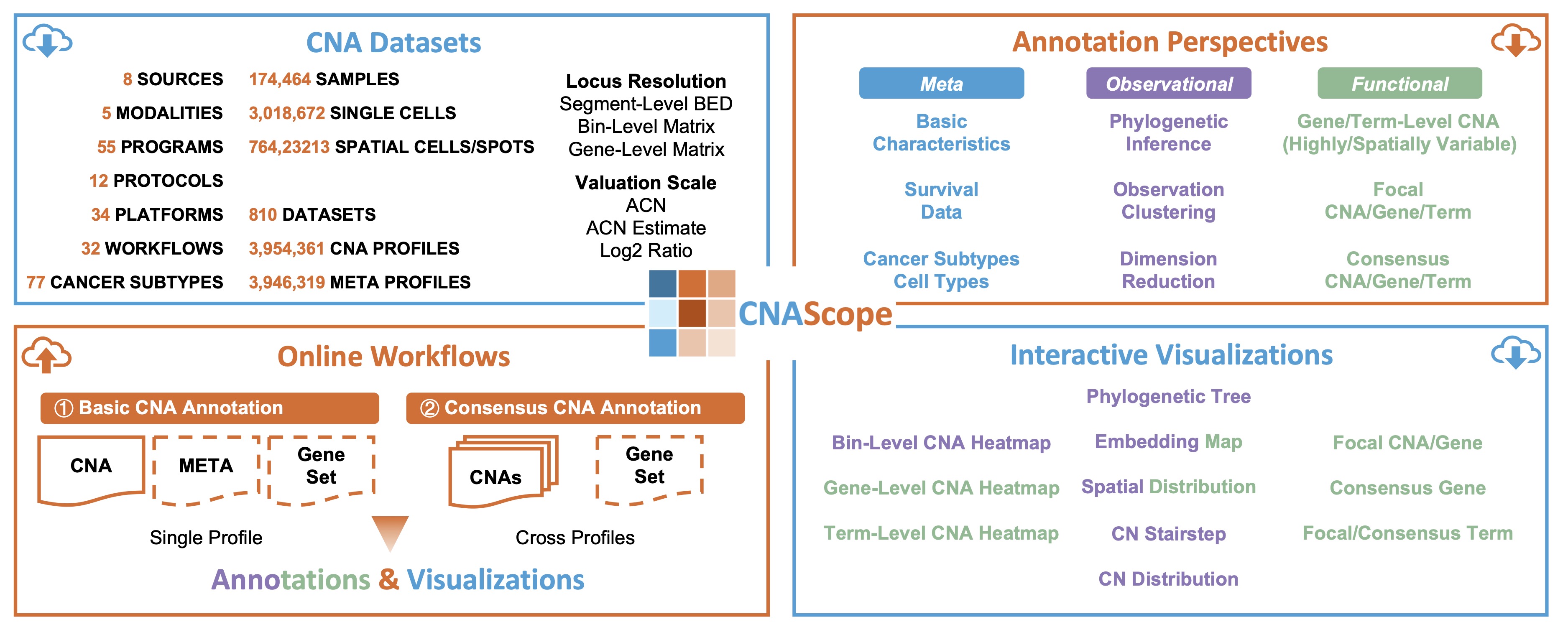
Abstract Copy number aberrations (CNAs) are critical drivers of genomic diversity in oncology, where recurrent CNAs frequently underlie tumorigenesis. However, existing public resources are limited in their somatic CNA specificity, breadth across multiple data modalities, and support for recurrent CNAs with online functional annotation and interactive visualization. Here, we present CNAScope (https://cna.fengslab.com/), a database that curates and functionally annotates over 3 954 361 CNA profiles and 3 946 319 metadata from 810 datasets, 174 464 samples, 3 018 672 single cells, and 764 232 spatial cells/spots, spanning 77 cancer subtypes from eight data sources and 55 cancer initiatives and institutions. CNAScope offers downloadable CNA annotations and interactive visualizations at bin, gene, and pathway term levels, including phylogenetic inference, clustering, dimension reduction, and focal/consensus CNA detection. Users can explore data through interactive heatmaps, phylogenetic trees, embedding plots, CN charts, and focal/consensus plots, or upload and annotate their own CNAs in real time. In all, with its large curated data volume and rich annotation capabilities, CNAScope serves as a vital resource for accelerating cancer research.
Bib
@article{doi_101093nargkaf1242,
  title = {{CNAScope: pan-cancer copy number aberration database with functional annotation and interactive visualization}},
  author = {Xikang Feng and Jieyi Zheng and Sisi Peng and Anna Jiang and Ka Ho Ng and Chengshang Lyu and Qiangguo Jin and Lingxi Chen},
  journal = {Nucleic Acids Research},
  year = {2026},
  volume = {54},
  number = {D1},
  pages = {D1364-D1375},
  doi = {10.1093/nar/gkaf1242},
  url = {https://doi.org/10.1093/nar/gkaf1242}
}
Journal metrics

BIOCHEMISTRY & MOLECULAR BIOLOGY JCR Q1 JIF rank 14/328

2025 annual data · ShowJCR community dataset · Retrieved 2026-11-23 · Source ↗
2026*
Nucleic Acids ResearchIF 15.0 · 2025JCR Q1 · 2025↗

MicrobialScope: an integrated genomic resource with rich annotations across bacteria, archaea, fungi, and viruses

Xikang Feng†, Yinhu Li†, Jieyi Zheng†, Xuhua Chen†, Shuo Yang, Yu Chen*, Shuai Cheng Li*

databasemicroorganismsbacteriaarchaeafungiand viruses
Abs
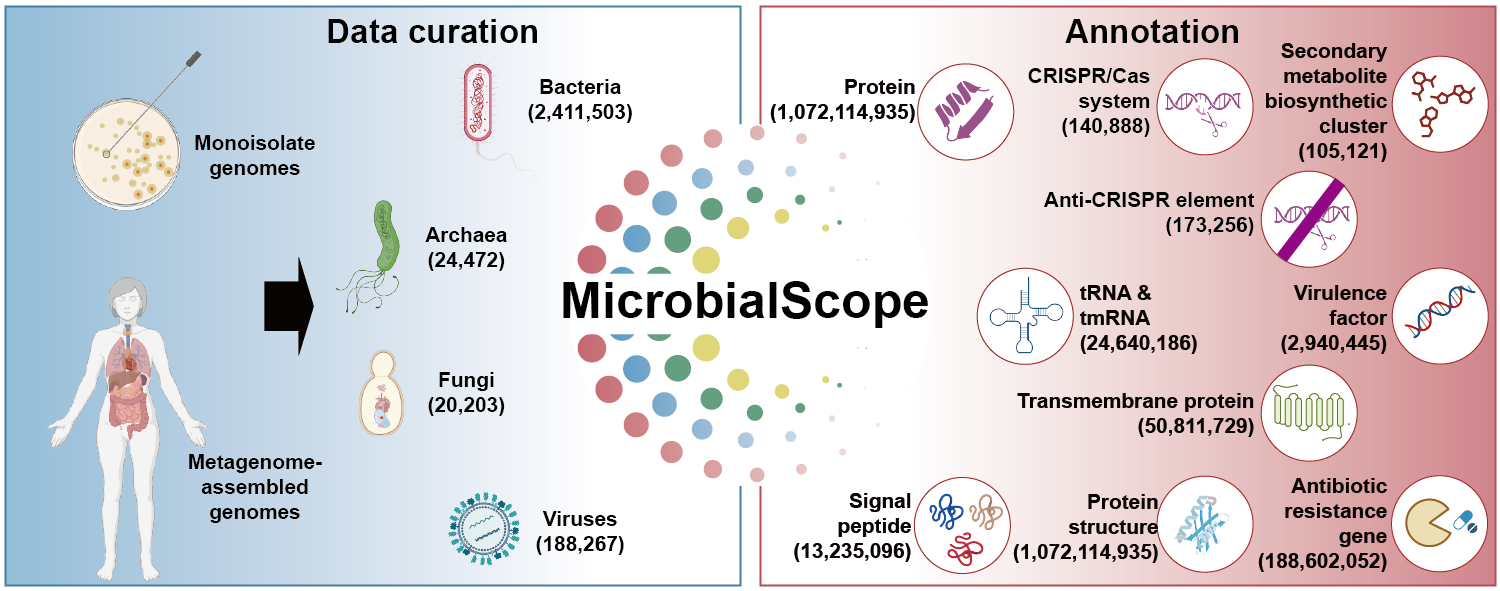
Abstract Microorganisms, including bacteria, archaea, fungi, and viruses, are the most taxonomically diverse and ecologically dominant life forms on Earth, playing critical roles in ecosystems, human health, and industrial applications. While existing microbial databases such as BV-BRC and IMG archive both monoisolate and metagenome-assembled genomes (MAGs) across domains, challenges remain in standardized, multi-level annotations and interactive tools for all microbial groups. Here, we present MicrobialScope (https://microbial.deepomics.org/), a comprehensive microbial genomic platform that integrates large-scale genome collections, multilevel annotations, and interactive visualizations. MicrobialScope harbors 2 411 503 bacterial, 24 472 archaeal, 20 203 fungal, and 188 267 viral genomes derived from both monoisolate assemblies and MAGs. Integrating 15 state-of-the-art bioinformatics tools and 10 specialized databases, MicrobialScope provides extensive annotations encompassing basic genomic features, genomic element prediction (e.g., genes, tRNAs, tmRNAs, CRISPR–Cas and anti-CRISPR elements, secondary metabolite biosynthetic clusters, signal peptides, and transmembrane proteins), and functional and structural annotations. This includes 1 072 114 935 proteins with diverse annotations, 24 640 186 tRNAs and tmRNAs, 140 888 CRISPR–Cas systems, 173 256 anti-CRISPR elements, 105 121 secondary metabolite biosynthetic clusters, 13 235 096 signal peptides, and 50 811 729 transmembrane proteins. In addition, MicrobialScope offers unrestricted access to all data resources, interactive visualization tools, and built-in online analytical modules for intuitive exploration and comparative analysis. With its extensive genome collection, comprehensive annotations, and user-friendly interface, MicrobialScope serves as a scalable platform to advance genome research across diverse microbial domains.
Bib
@article{doi_101093nargkaf1234,
  title = {{MicrobialScope: an integrated genomic resource with rich annotations across bacteria, archaea, fungi, and viruses}},
  author = {Xikang Feng and Yinhu Li and Jieyi Zheng and Xuhua Chen and Shuo Yang and Yu Chen and Shuai Cheng Li},
  journal = {Nucleic Acids Research},
  year = {2026},
  volume = {54},
  number = {D1},
  pages = {D842-D851},
  doi = {10.1093/nar/gkaf1234},
  url = {https://doi.org/10.1093/nar/gkaf1234}
}
Journal metrics

BIOCHEMISTRY & MOLECULAR BIOLOGY JCR Q1 JIF rank 14/328

2025 annual data · ShowJCR community dataset · Retrieved 2026-11-23 · Source ↗
Research figure
Original ↗

← / → Browse   ·   Esc Close