RESEARCH OUTPUT

Publications 17

Research papers, methods, and resources.

† Equal contribution   ·   * Corresponding author

2020
BMC GenomicsIF 3.9 · 2025JCR Q2 · 2025↗

I-Impute: a self-consistent method to impute single cell RNA sequencing data

Xikang Feng†, Lingxi Chen†, Zishuai Wang, Shuai Cheng Li*

scRNA-seqImputationSelf-consistencyCell subpopulation identification
Abs
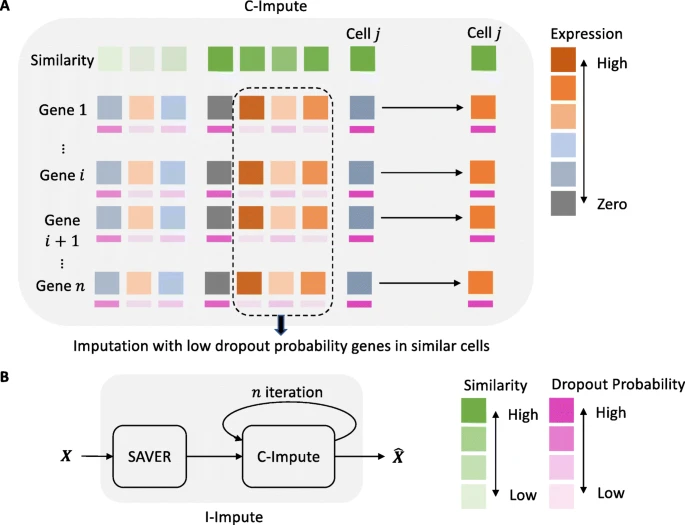
Abstract Background Single-cell RNA-sequencing (scRNA-seq) is becoming indispensable in the study of cell-specific transcriptomes. However, in scRNA-seq techniques, only a small fraction of the genes are captured due to “dropout” events. These dropout events require intensive treatment when analyzing scRNA-seq data. For example, imputation tools have been proposed to estimate dropout events and de-noise data. The performance of these imputation tools are often evaluated, or fine-tuned, using various clustering criteria based on ground-truth cell subgroup labels. This limits their effectiveness in the cases where we lack cell subgroup knowledge. We consider an alternative strategy which requires the imputation to follow a “self-consistency” principle; that is, the imputation process is to refine its results until there is no internal inconsistency or dropouts from the data. Results We propose the use of “self-consistency” as a main criteria in performing imputation. To demonstrate this principle we devised I-Impute, a “self-consistent” method, to impute scRNA-seq data. I-Impute optimizes continuous similarities and dropout probabilities, in iterative refinements until a self-consistent imputation is reached. On the in silico data sets, I-Impute exhibited the highest Pearson correlations for different dropout rates consistently compared with the state-of-art methods SAVER and scImpute. Furthermore, we collected three wetlab datasets, mouse bladder cells dataset, embryonic stem cells dataset, and aortic leukocyte cells dataset, to evaluate the tools. I-Impute exhibited feasible cell subpopulation discovery efficacy on all the three datasets. It achieves the highest clustering accuracy compared with SAVER and scImpute. Conclusions A strategy based on “self-consistency”, captured through our method, I-Impute, gave imputation results better than the state-of-the-art tools. Source code of I-Impute can be accessed at https://github.com/xikanfeng2/I-Impute .
Bib
@article{doi_101186s12864-020-07007-w,
  title = {{I-Impute: a self-consistent method to impute single cell RNA sequencing data}},
  author = {Xikang Feng and Lingxi Chen and Zishuai Wang and Shuai Cheng Li},
  journal = {BMC Genomics},
  year = {2020},
  volume = {21},
  number = {S10},
  doi = {10.1186/s12864-020-07007-w},
  url = {https://doi.org/10.1186/s12864-020-07007-w}
}
Journal metrics

BIOTECHNOLOGY & APPLIED MICROBIOLOGY JCR Q2 JIF rank 75/180

GENETICS & HEREDITY JCR Q2 JIF rank 57/192

2025 annual data · ShowJCR community dataset · Retrieved 2026-11-23 · Source ↗
2020
Clinical and Translational MedicineIF 7.9 · 2025JCR Q1 · 2025↗

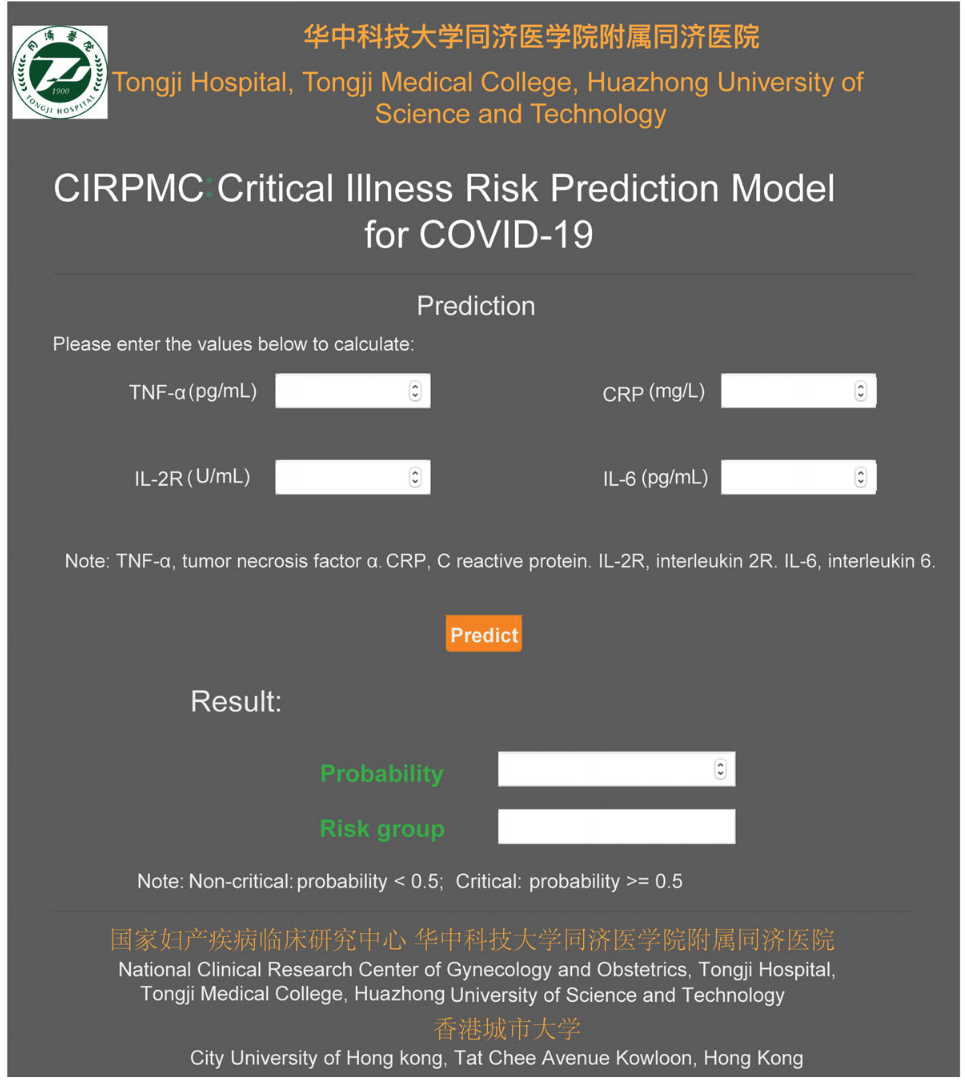
CIRPMC: An online model with simplified inflammatory signature to predict the occurrence of critical illness in patients with COVID‐19

Yue Gao†, Lingxi Chen†, Shaoqing Zeng†, Xikang Feng†, JianHua Chi†, Ya Wang, Huayi Li, Tengping Jiang, Yang Yu, XiaoFei Jiao, Dan Liu, XinXia Feng, SiYuan Wang, RuiDi Yu, Yuan Yuan, Sen Xu, Guangyao Cai, Xiaoming Xiong, Pingbo Chen, Qingqing Mo, Xin Jin, Yuan Wu, Ding Ma, Chunrui Li, Shuai Cheng Li*, Qinglei Gao*

COVID-19Online model
Bib
@article{doi_101002ctm2210,
  title = {{CIRPMC: An online model with simplified inflammatory signature to predict the occurrence of critical illness in patients with COVID‐19}},
  author = {Yue Gao and Lingxi Chen and Shaoqing Zeng and Xikang Feng and JianHua Chi and Ya Wang and Huayi Li and Tengping Jiang and Yang Yu and XiaoFei Jiao and Dan Liu and XinXia Feng and SiYuan Wang and RuiDi Yu and Yuan Yuan and Sen Xu and Guangyao Cai and Xiaoming Xiong and Pingbo Chen and Qingqing Mo and Xin Jin and Yuan Wu and Ding Ma and Chunrui Li and Shuai Cheng Li and Qinglei Gao},
  journal = {Clinical and Translational Medicine},
  year = {2020},
  volume = {10},
  number = {6},
  doi = {10.1002/ctm2.210},
  url = {https://doi.org/10.1002/ctm2.210}
}
Journal metrics

MEDICINE, RESEARCH & EXPERIMENTAL JCR Q1 JIF rank 25/191

ONCOLOGY JCR Q1 JIF rank 45/333

2025 annual data · ShowJCR community dataset · Retrieved 2026-11-23 · Source ↗
2019
BMC BioinformaticsIF 4.4 · 2025JCR Q1/Q2 · 2025↗

MIRIA: a webserver for statistical, visual and meta-analysis of RNA editing data in mammals

Xikang Feng†, Zishuai Wang†, Hechen Li, Shuai Cheng Li*

RNA editingVisualizationAnalysisWebserverMammal
Abs
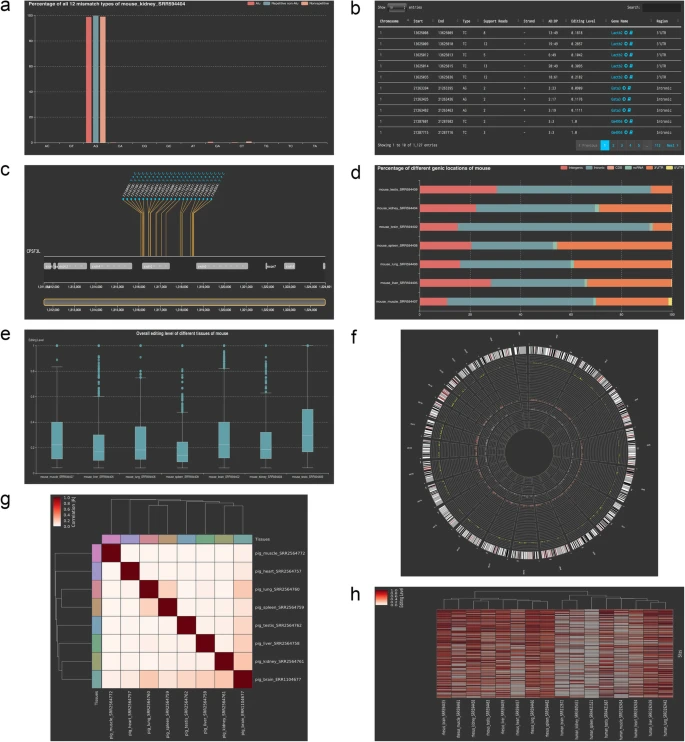
Abstract Background Adenosine-to-inosine RNA editing can markedly diversify the transcriptome, leading to a variety of critical molecular and biological processes in mammals. Over the past several years, researchers have developed several new pipelines and software packages to identify RNA editing sites with a focus on downstream statistical analysis and functional interpretation. Results Here, we developed a user-friendly public webserver named MIRIA that integrates statistics and visualization techniques to facilitate the comprehensive analysis of RNA editing sites data identified by the pipelines and software packages. MIRIA is unique in that provides several analytical functions, including RNA editing type statistics, genomic feature annotations, editing level statistics, genome-wide distribution of RNA editing sites, tissue-specific analysis and conservation analysis. We collected high-throughput RNA sequencing (RNA-seq) data from eight tissues across seven species as the experimental data for MIRIA and constructed an example result page. Conclusion MIRIA provides both visualization and analysis of mammal RNA editing data for experimental biologists who are interested in revealing the functions of RNA editing sites. MIRIA is freely available at https://mammal.deepomics.org.
Bib
@article{doi_101186s12859-019-3242-2,
  title = {{MIRIA: a webserver for statistical, visual and meta-analysis of RNA editing data in mammals}},
  author = {Xikang Feng and Zishuai Wang and Hechen Li and Shuai Cheng Li},
  journal = {BMC Bioinformatics},
  year = {2019},
  volume = {20},
  number = {S24},
  doi = {10.1186/s12859-019-3242-2},
  url = {https://doi.org/10.1186/s12859-019-3242-2}
}
Journal metrics

BIOCHEMICAL RESEARCH METHODS JCR Q1 JIF rank 18/85

BIOTECHNOLOGY & APPLIED MICROBIOLOGY JCR Q2 JIF rank 59/180

MATHEMATICAL & COMPUTATIONAL BIOLOGY JCR Q1 JIF rank 9/67

2025 annual data · ShowJCR community dataset · Retrieved 2026-11-23 · Source ↗
2019
Frontiers in GeneticsIF 3.0 · 2025JCR Q2 · 2025↗

SCDevDB: A Database for Insights Into Single-Cell Gene Expression Profiles During Human Developmental Processes

Zishuai Wang†, Xikang Feng†, Shuai Cheng Li*

single cellgene expressiondevelopmentdatabasecell typedifferential expression
Abs
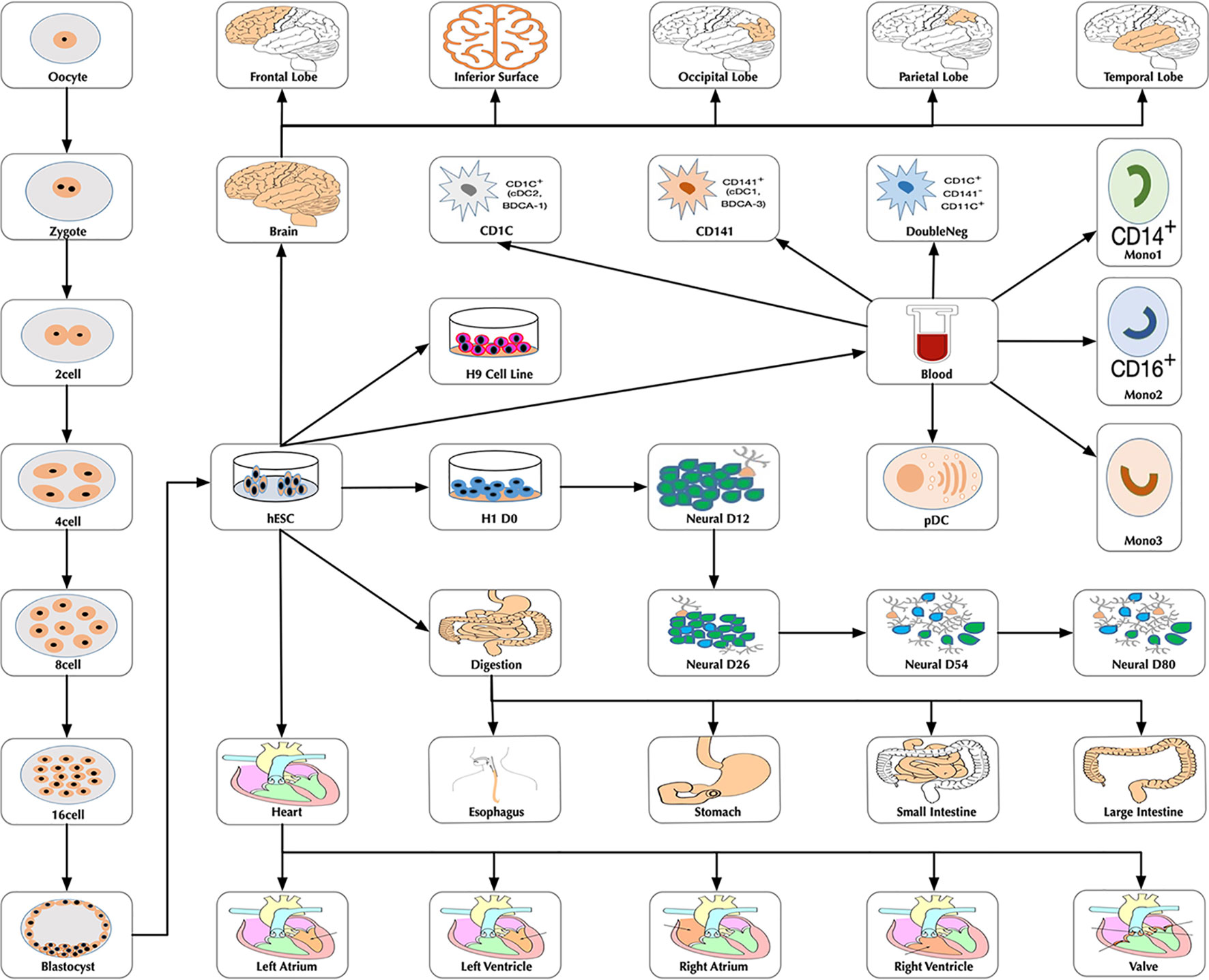
Single-cell RNA-seq studies profile thousands of cells in developmental processes. Current databases for human single-cell expression atlas only provide search and visualize functions for a selected gene in specific cell types or subpopulations. These databases are limited to technical properties or visualization of single-cell RNA-seq data without considering the biological relations of their collected cell groups. Here, we developed a database to investigate single-cell gene expression profiling during different developmental pathways (SCDevDB). In this database, we collected 10 human single-cell RNA-seq datasets, split these datasets into 176 developmental cell groups, and constructed 24 different developmental pathways. SCDevDB allows users to search the expression profiles of the interested genes across different developmental pathways. It also provides lists of differentially expressed genes during each developmental pathway, T-distributed stochastic neighbor embedding maps showing the relationships between developmental stages based on these differentially expressed genes, Gene Ontology, and Kyoto Encyclopedia of Genes and Genomes analysis results of these differentially expressed genes. This database is freely available at https://scdevdb.deepomics.org.
Bib
@article{doi_103389fgene201900903,
  title = {{SCDevDB: A Database for Insights Into Single-Cell Gene Expression Profiles During Human Developmental Processes}},
  author = {Zishuai Wang and Xikang Feng and Shuai Cheng Li},
  journal = {Frontiers in Genetics},
  year = {2019},
  volume = {10},
  doi = {10.3389/fgene.2019.00903},
  url = {https://doi.org/10.3389/fgene.2019.00903}
}
Journal metrics

GENETICS & HEREDITY JCR Q2 JIF rank 80/192

2025 annual data · ShowJCR community dataset · Retrieved 2026-11-23 · Source ↗
2019
GenesIF 3.1 · 2025JCR Q2 · 2025↗

Genome-Wide Investigation and Functional Analysis of Sus scrofa RNA Editing Sites across Eleven Tissues

Zishuai Wang†, Xikang Feng†, Zhonglin Tang, Shuai Cheng Li*

RNA editingpigcomprehensive analysisdatabasetissues
Abs
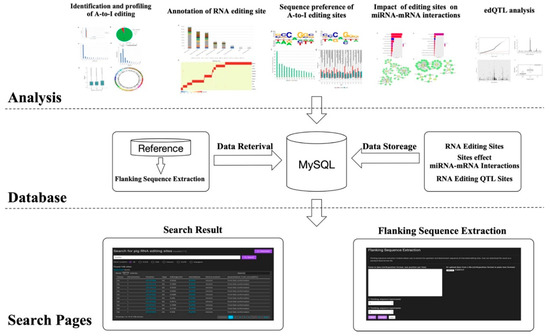
Recently, the prevalence and importance of RNA editing have been illuminated in mammals. However, studies on RNA editing of pigs, a widely used biomedical model animal, are rare. Here we collected RNA sequencing data across 11 tissues and identified more than 490,000 RNA editing sites. We annotated their biological features, detected flank sequence characteristics of A-to-I editing sites and the impact of A-to-I editing on miRNA–mRNA interactions, and identified RNA editing quantitative trait loci (edQTL). Sus scrofa RNA editing sites showed high enrichment in repetitive regions with a median editing level as 15.38%. Expectedly, 96.3% of the editing sites located in non-coding regions including intron, 3′ UTRs, intergenic, and gene proximal regions. There were 2233 editing sites located in the coding regions and 980 of them caused missense mutation. Our results indicated that to an A-to-I editing site, the adjacent four nucleotides, two before it and two after it, have a high impact on the editing occurrences. A commonly observed editing motif is CCAGG. We found that 4552 A-to-I RNA editing sites could disturb the original binding efficiencies of miRNAs and 4176 A-to-I RNA editing sites created new potential miRNA target sites. In addition, we performed edQTL analysis and found that 1134 edQTLs that significantly affected the editing levels of 137 RNA editing sites. Finally, we constructed PRESDB, the first pig RNA editing sites database. The site provides necessary functions associated with Sus scrofa RNA editing study.
Bib
@article{doi_103390genes10050327,
  title = {{Genome-Wide Investigation and Functional Analysis of Sus scrofa RNA Editing Sites across Eleven Tissues}},
  author = {Zishuai Wang and Xikang Feng and Zhonglin Tang and Shuai Cheng Li},
  journal = {Genes},
  year = {2019},
  volume = {10},
  number = {5},
  pages = {327},
  doi = {10.3390/genes10050327},
  url = {https://doi.org/10.3390/genes10050327}
}
Journal metrics

GENETICS & HEREDITY JCR Q2 JIF rank 74/192

2025 annual data · ShowJCR community dataset · Retrieved 2026-11-23 · Source ↗
5 of 17 publications

Research figure
Original ↗

← / → Browse   ·   Esc Close